
At 10:00 AM on a Monday, a tender agency in Maharashtra opened its portal for a Rs. 150 crore infrastructure contract.
By 4:00 PM, it received 268 tender submissions, each packed with dozens of annexures, legal declarations, scanned certificates and technical bids.
Traditionally, a team of reviewers would split the work by manually checking formats, eligibility criteria, financial compliance and clause-by-clause verification. It would take a minimum of 6–8 days to review all bids.
Manual verification is also error prone and tedious , any mistake in review process can result in wrong company being made eligible in the tendering process. Hours may be lost in evaluation and it can result in delays associated with execution and awarding of the tendering process.
Technology Adoption changed everything.
This time, it took under 45 minutes. How?
The agency used an AI-powered tender verification platform that processed every document, highlighted missing clauses, flagged non-compliance and generated reviewer summaries, all before tea break.
For tender agencies, the challenge isn’t crafting bids, it’s vetting them. And manual processes are cracking under pressure.
The Traditional Process and Why It’s Broken
Tender agencies must ensure that each bidder complies with strict legal and technical standards before moving to evaluation. That involves:
- Manually parsing PDF submissions, often scanned or poorly formatted
- Checking dozens of annexures: Form A to Form K, affidavits, solvency certificates, GST filings
- Verifying clause compliance: From eligibility norms to blacklisting declarations
- Cross-checking signatures, stamps, dates and formats
With hundreds of bids per tender, this process quickly becomes unscalable. Common problems arise like:
- Human fatigue in critical oversights in verification
- Time constraints delay evaluations and re-tendering
- Version chaos, missing or inconsistent forms
- Risk of favoritism or inconsistency
This process isn’t just slow, it’s vulnerable.
Studies show human review errors linger in ~23% of documents that cost companies millions in lost contracts.
The Risk of Manual Tender Reviews
Manual mistakes in tender reviews aren’t just clerical; they have cascading consequences across business units, growth pipelines and reputation.
Review Delays Lead to Project Delays
When verification is delayed by days or weeks, project timelines get pushed. That affects contractors, government departments and downstream services.
Compliance Gaps Trigger Disputes
If an ineligible vendor slips through due to human oversight and wins the bid, agencies face RTIs, audits or legal escalation.
Inefficiency Reduces Throughput
With manual reviews, teams can verify only a few tenders per hour, capping overall processing capacity and limiting how many tenders an agency can float and finalize.
Zero Audit Trail
Manual checking lacks transparent logs, making it hard to defend evaluation integrity during challenges.
How AI Is Transforming Tender Verification at Scale
AI-powered tender verification tools are redefining how agencies manage high-volume document checks, not only automating the tedious work but unlocking strategic insights and intelligent workflows. Here’s how:
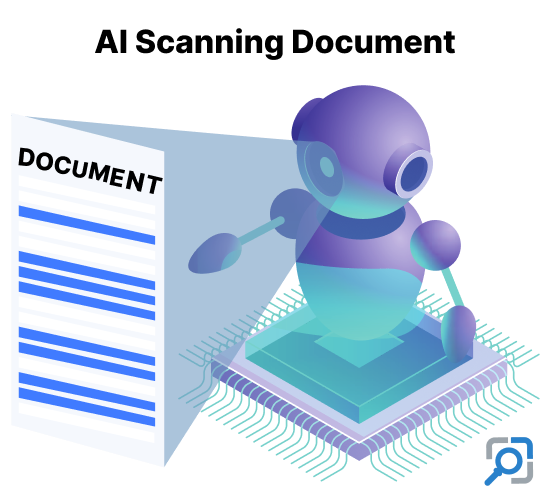
- Analyse & extract information for any document.
- Accelerate & improve accuracy of document verification.
- Simplify admission & job recruitment process.
Parse Documents in Any Format
Using enterprise-grade OCR and Natural Language Processing (NLP), the system assesses scanned PDFs, annexures, certificates and even image-based submissions. No matter what the format is, it extracts data with 99%+ accuracy.
Auto-Detect Mandatory Clauses & Fields
AI cross-references every tender submission against the original tender’s checklist. It flags:
- Missing affidavits
- Outdated financials
- Incorrect document formats
- Missing stamps, dates or digital signatures
Build Your Own Intelligent Workflow

No more static, one-size-fits-all templates. Agencies can design custom verification workflows based on tender category (infrastructure, education, IT, etc.), ensuring that each submission is checked according to relevant norms. For example:
- Infra tenders trigger solvency verification → technical eligibility → litigation history check
- Education tenders auto-prioritize accreditation certificates and past project experience
Workflows can include conditional logic, auto-escalation rules and integration with internal dashboards or e-tendering platforms.
Talk to Your Documents
Instead of digging through annexures manually, evaluators can ask the system questions in natural language:
- “Show me tenders missing a CA-signed turnover certificate”
- “Which bidders have debarment history?”
- “List submissions where the GST number is not found”
The AI instantly fetches results from across hundreds of documents, cutting hours of search time into seconds.

Analyze Workflow Execution
With built-in analytics, agencies get deep visibility into their verification process:
- Average time spent per submission
- Most frequently flagged issues
- Reviewer performance metrics
- Real-time dashboards on tender progress
This allows continuous improvement, workload distribution, and defensible audit trails—especially valuable during government audits or RTI challenges.
Summarize and Log Everything
Each submission is backed by a system-generated compliance report, highlighting all actions taken, documents reviewed, clauses flagged and final status, ensuring complete transparency.
The Strategic Gains for Tender Agencies
| Advantage | Outcome |
|---|---|
| Minutes instead of days | Review 100+ tenders in under an hour |
| Transparent & traceable | Built-in logs ensure audit-readiness |
| Scalable workflows | Teams can handle more tenders, faster |
| Standardized evaluation | Zero subjective bias, full clause-level clarity |
In pilot programs, agencies using AI tools reported:
- 70% faster processing
- 95%+ clause-level accuracy
- 0 legal disputes from evaluation inconsistencies
Implementing AI Tender Verification in Your Agency

Step 1: Assess Current Workload
Track the number of tenders processed monthly, time per submission and most common review bottlenecks.
Step 2: Define Critical Verification Parameters
List mandatory documents and clauses based on tender type, eligibility, financials, technicals and declarations.
Step 3: Integrate an AI Verification Platform
Choose a solution that supports:
- Multi-language OCR
- Clause comparison
- Data extraction
- User-level audit logs
Step 4: Train Evaluation Teams
Ensure your staff is trained to review flagged items, use override functions and escalate questionable bids efficiently.
Step 5: Monitor & Refine
Use metrics like review time, flagged errors and submission quality to refine your process further.
Pitfalls to Avoid
- Don’t chase generic AI. Specialized document verification tools (with >90% accuracy) outperform broad models.
- Data privacy must be sacred. Verify enterprise-grade security and encryption.
- Train your teams. AI doesn’t replace human judgement; it amplifies it.

- Secured, organized access to all your documents from one place.
- Track every document for compliance and security.
- Precise AI-driven document analysis.
- Seamlessly handle large volumes of documents
AI as Your Tender Review Co-Pilot
Tender agencies aren’t just reviewers; they’re infrastructure enablers. Every hour saved in verification accelerates public works, boosts transparency and builds trust.
AI isn’t just helping teams go faster, it’s helping them go fairer, cleaner and smarter.
By eliminating manual bottlenecks, you don’t just process tenders, you build better governance.