

Type "marksheet editor AI" into Google and you will find tools offering to change marks, names and grades on a scanned marksheet.
No printing press. No rubber stamps. A browser tab and two minutes.
Organised forgery has not gone away either. In December 2025, Kerala Police seized more than one lakh fake certificates linked to 22 universities.
For admissions offices, HR teams and lenders, the question has changed. It is no longer "does this look real?" It is "can we prove it is real?"
This guide covers the five checks that catch fake marksheets and AI-edited certificates, and how to run them on every file instead of a sample.
Screening certificates at volume?
Run your real applicant files through DocuExprt on a call.
- Tamper flags on every upload
- QR and digital signature checks
- DigiLocker source verification
- Pass, Refer or Fail with audit log
Loading the form… If it does not appear, open the demo page.
🔒 CERT-IN Certified🛡 ISO 27001🎟 Free trial tokens
Table of Contents
- What changed: forgery moved from the print shop to the browser
- The five kinds of fake certificate you will actually see
- 5 checks that catch fake marksheets and AI-edited certificates
- Why a database match alone is not enough
- Who is most exposed
- Manual vs automated certificate verification
- How to build a certificate verification workflow
- Guardrails: verify fairly, not just fast
- Frequently Asked Questions
What Changed: Forgery Moved From the Print Shop to the Browser
A classic fake degree needed a supplier. Someone had to copy the paper, the hologram, the seal and the signature.
The Kerala racket worked this way. Police traced it to printing presses and skilled workers who copied holograms and seals.
AI editing skips all of that. The forger starts with a genuine marksheet and changes only what matters: the marks, the grade, the name or the year.
Everything else stays authentic. The layout, the logo, the paper texture in the scan, even the controller's signature.
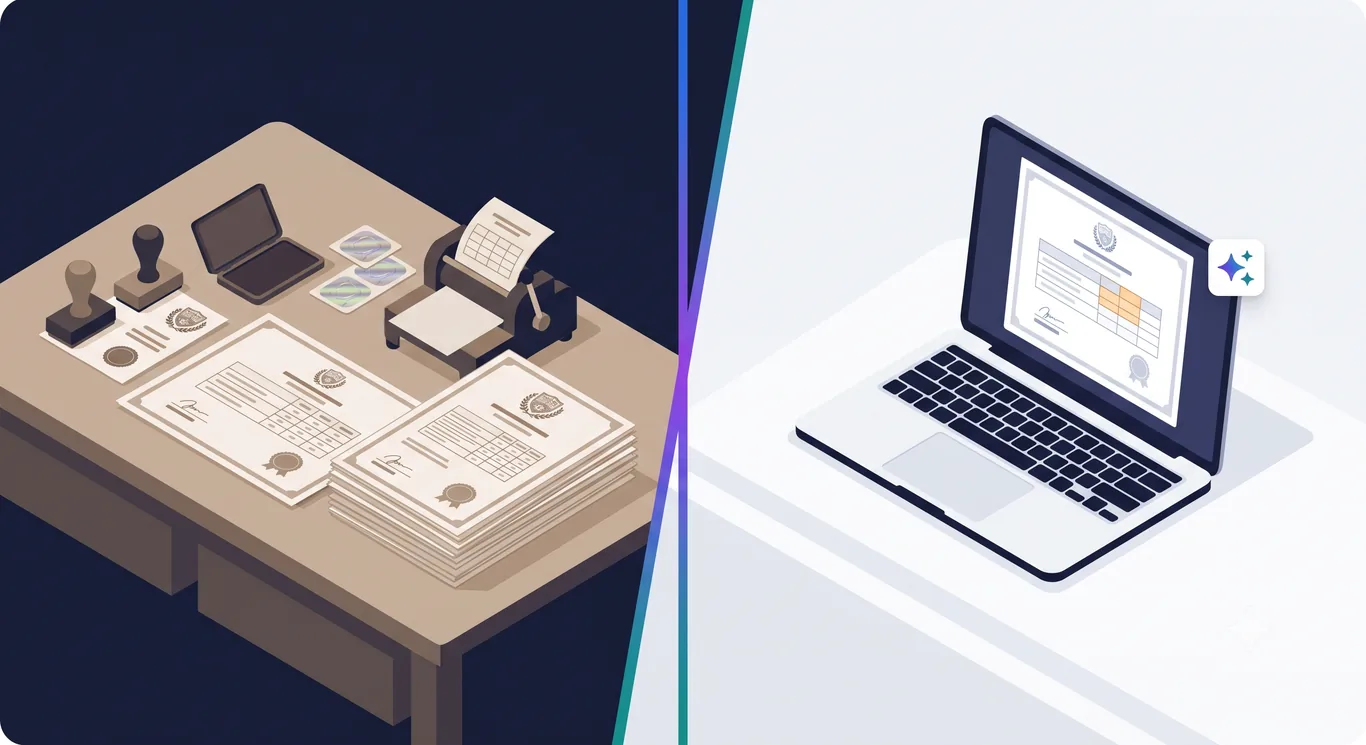
❌ The old fake
- Source: printed from scratch
- Cost: paid to a racket
- Time: days to weeks
- Tell-tales: wrong paper, blurred seal, odd fonts
- Caught by: a trained eye, often
⚠️ The AI-edited fake
- Source: a real marksheet, lightly changed
- Cost: close to zero
- Time: minutes
- Tell-tales: invisible on screen
- Caught by: file forensics and the issuer's record
The Five Kinds of Fake Certificate You Will Actually See
"Fake certificate" covers very different frauds. Each one fails a different check.
Knowing which kind you face tells you which control to rely on.
| Type of fake | How it is made | What catches it |
|---|---|---|
| Edited genuine marksheet | Real scan, marks or name changed with an editor or AI tool | File forensics + issuer record |
| Fabricated certificate from a real university | Template copied, details invented | Issuer record, QR and signature check |
| Certificate from an unrecognised institution | Issued by a body that is not a recognised university | Recognition check against the UGC list |
| Fully AI-generated document | Generated from a prompt, no original exists | Metadata, template match, missing QR |
| Genuine document, wrong person | A real certificate belonging to someone else | Name, date of birth and photo cross-match |
Notice that no single check catches all five. That is why the checks below work as a stack, not a menu.
5 Checks That Catch Fake Marksheets and AI-Edited Certificates
Each check answers a different question. Together they cover all five fraud types above.
🔍 1. File Forensics: Was This File Edited After It Was Issued?
Every PDF records which software created it, when, and how many times it was saved.
A marksheet exported by a university system and then re-saved in an image editor leaves a trail. So does one that was saved several times on top of the original.
Red flags to look for:
- Editor software in the producer field, where you expect an exam or ERP system
- A modified date long after the issue date printed on the document
- Multiple incremental saves, meaning content was added on top of the original
- A stripped digital signature, or signature fields that were never filled
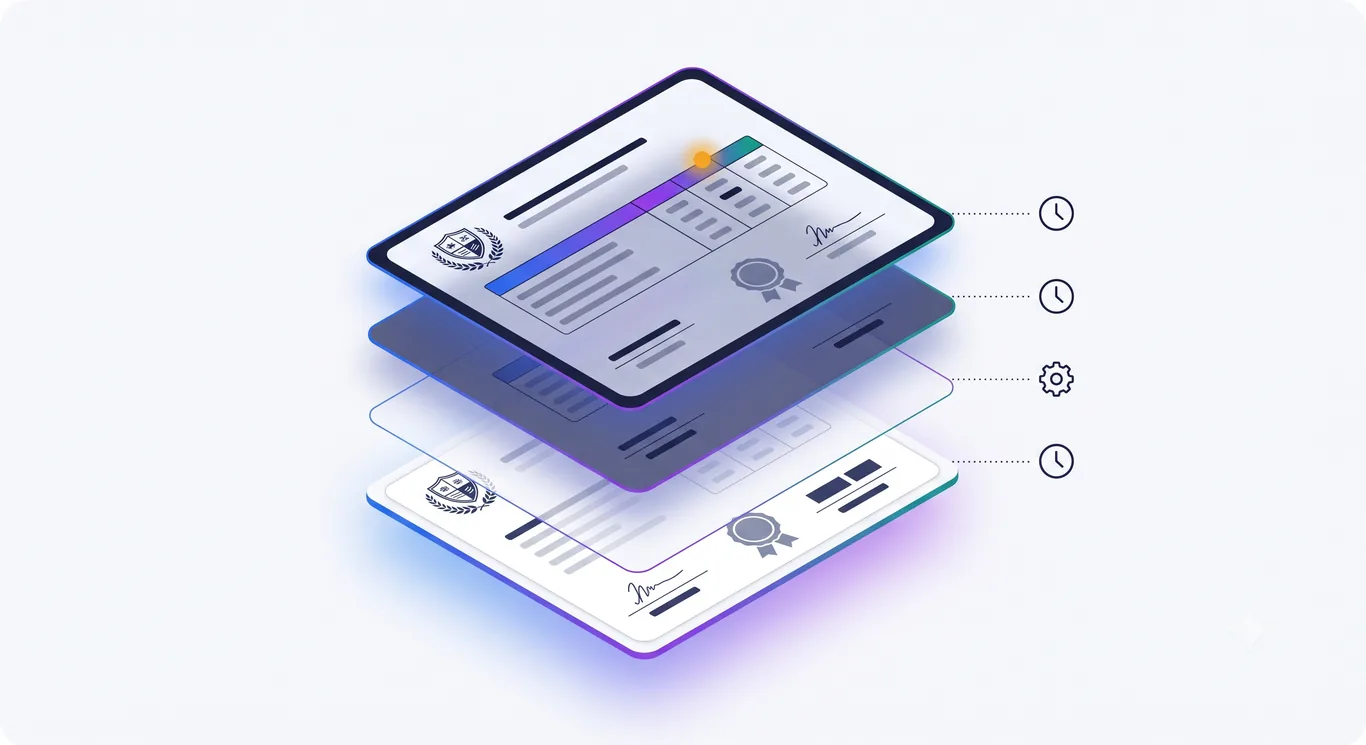
You can see this for yourself with our free PDF forensics viewer, which reads the file in your browser without uploading it.
🧪 2. Pixel-Level Analysis: Does Any Part of the Image Disagree With the Rest?
When one area of a scan is changed, it rarely matches the rest exactly.
Error Level Analysis (ELA) re-compresses the image and shows which regions compress differently. An edited mark often lights up against an untouched background.
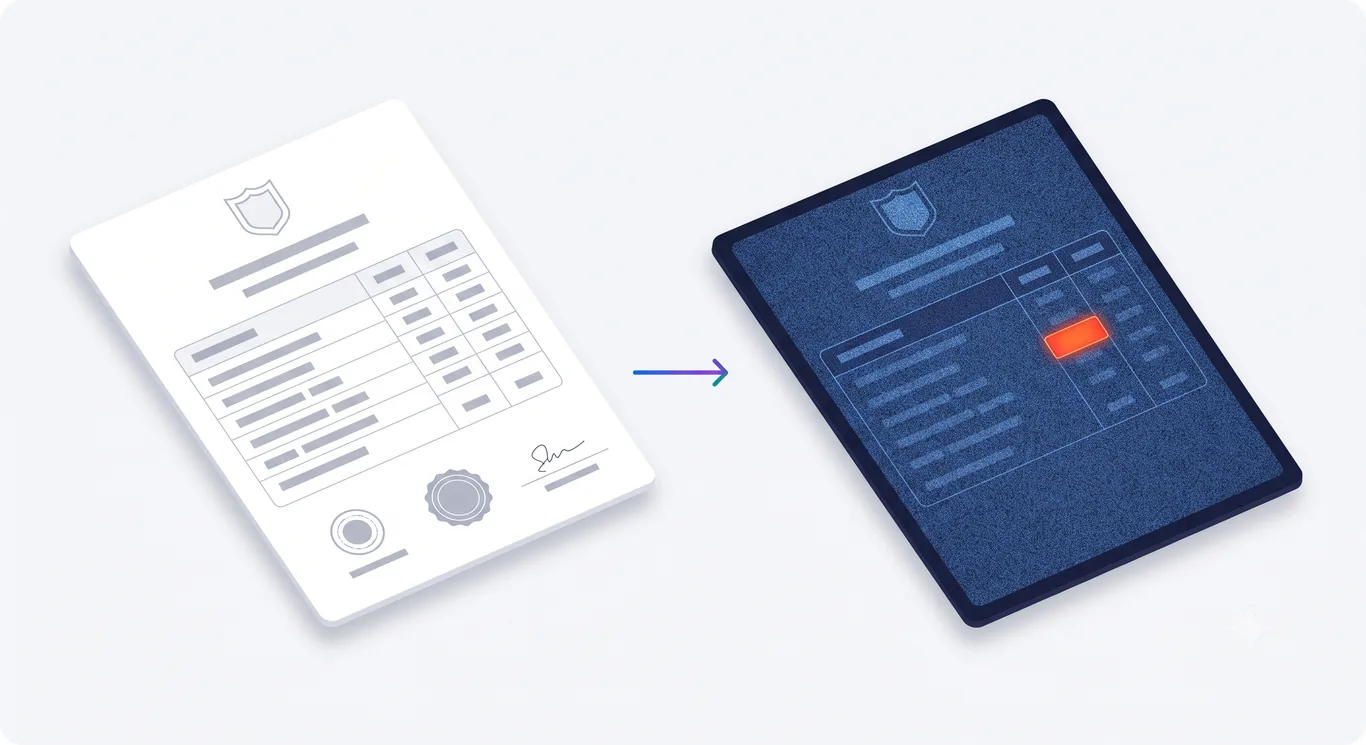
Font and overlay checks add to this. Changed digits often differ slightly in weight or spacing from the ones around them, or sit on a separate text layer.
The free document tampering checker combines metadata, edit history and ELA into a single 0-100 tamper risk score.
📱 3. QR Code and Digital Signature: Does the Document Agree With Itself?
Many universities now print a QR code on marksheets and degrees. Documents issued through DigiLocker are digitally signed by the issuer.
These are powerful checks, but only if someone actually runs them. A QR code nobody scans proves nothing.
- Decode the QR and compare its data field by field with the printed marks
- Check where the QR points, because a lookalike domain is a common trick
- Validate the signature, since any change after signing breaks it
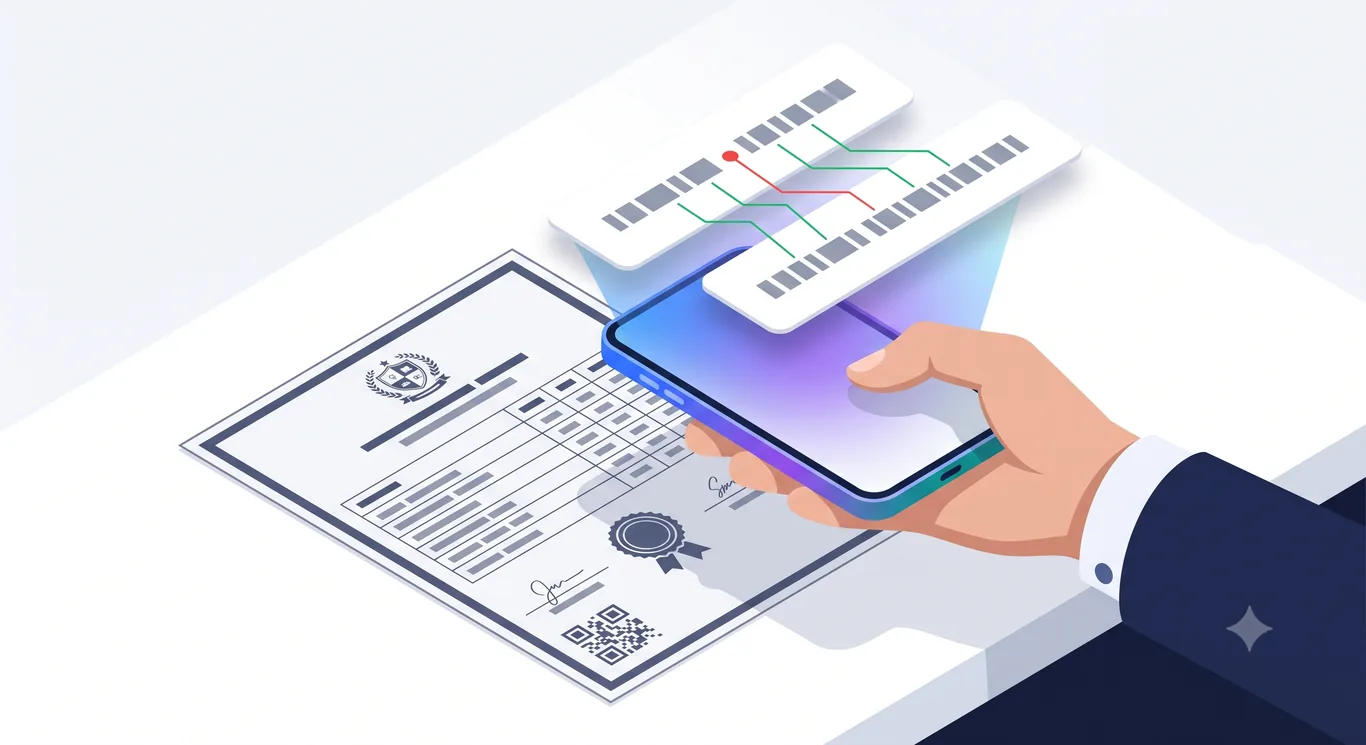
An edited marksheet with an untouched QR code gives itself away. The QR still carries the original marks.
🏛️ 4. Source Verification: What Does the Issuer's Record Say?
This is the strongest check, because it bypasses the document entirely.
Instead of trusting the file an applicant uploads, you fetch the record from the issuer. In India that increasingly means DigiLocker and the National Academic Depository (NAD), where universities and boards issue academic records directly.
With the candidate's consent, a DigiLocker-based verification flow pulls documents straight from the issuing authority. A forger cannot edit a record they never touch.
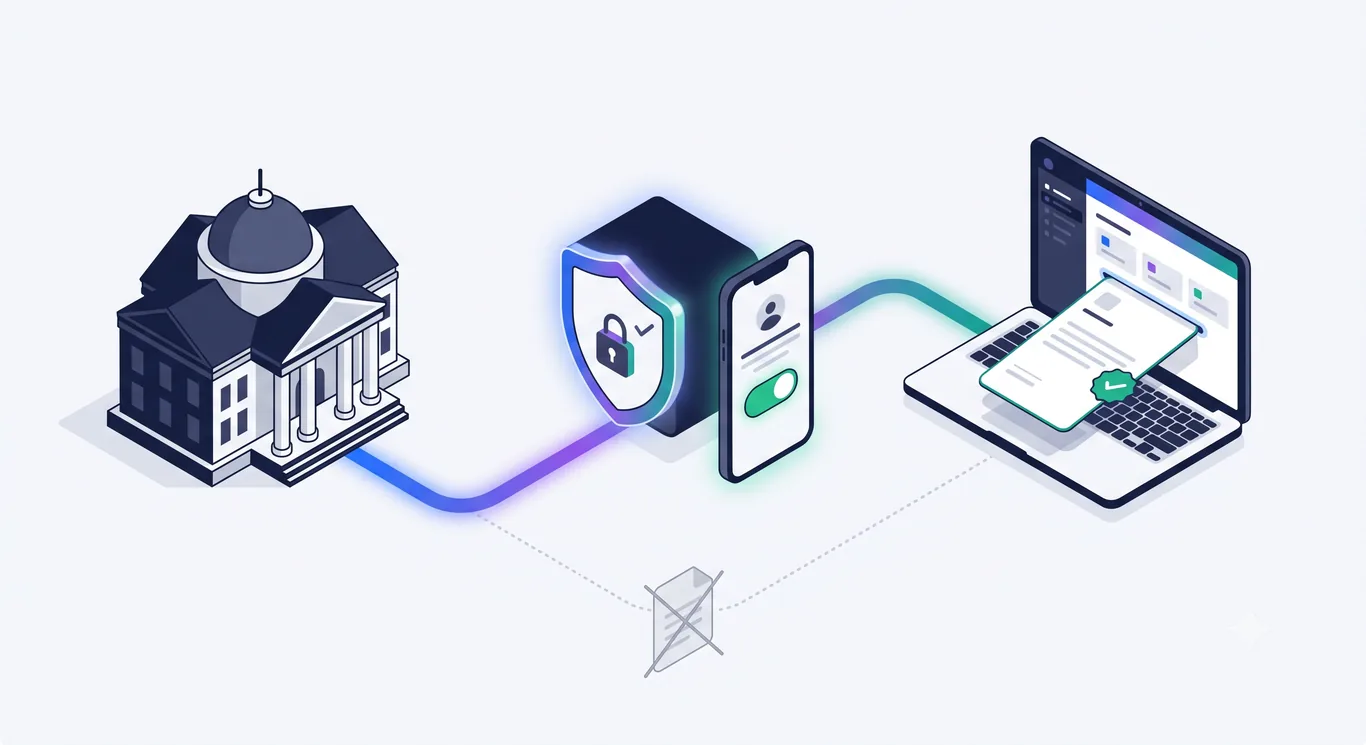
For older graduates whose records were never digitised, the fallback is a direct confirmation from the university's examination section.
🔗 5. Cross-Document Consistency: Does the Whole File Tell One Story?
A forger can perfect one document. Keeping five documents consistent with each other is much harder.
- Name, date of birth and parent's name should match across marksheets, ID and degree
- Passing years should follow a realistic sequence for the candidate's age
- Totals and CGPA should add up from the subject marks shown
- Roll and enrolment numbers should follow the issuer's known format
- The photo should match the applicant's ID and selfie (try the free face match checker)
These rules catch the fifth fraud type: a real certificate carried by the wrong person.
THE FIVE-CHECK VERIFICATION STACK
Forensics asks whether the file was changed. The issuer check asks whether the facts are true. Consistency asks whether they belong to this person.
Why a Database Match Alone Is Not Enough
Many verification setups stop at one question: does a record with this roll number exist?
That catches invented certificates. It misses the more common case.
An AI-edited marksheet usually carries a real roll number belonging to a real student. The lookup succeeds. Only the marks, or the name, are wrong.
So a lookup must compare values, not just confirm a record exists. And where no issuer record can be reached, forensics is the only line of defence left.
This is also where document-level tools differ from pure lookup services. A lookup reads a registry. A document AI fraud detection layer also reads the paper, and can tell you when the two disagree.
Catch the edit, not just the typo
Tell us your admissions or hiring volumes.
- Forensics plus issuer checks
- PAN, Aadhaar, GST + 20+ govt DBs
- Batch upload up to 100 files
- Role-based access and audit logs
Or book a demo on your own files.
🔒 CERT-IN Certified🛡 ISO 27001🎟 Free trial tokens
Who Is Most Exposed
Any team that takes decisions on self-uploaded certificates carries this risk. Four carry most of it.
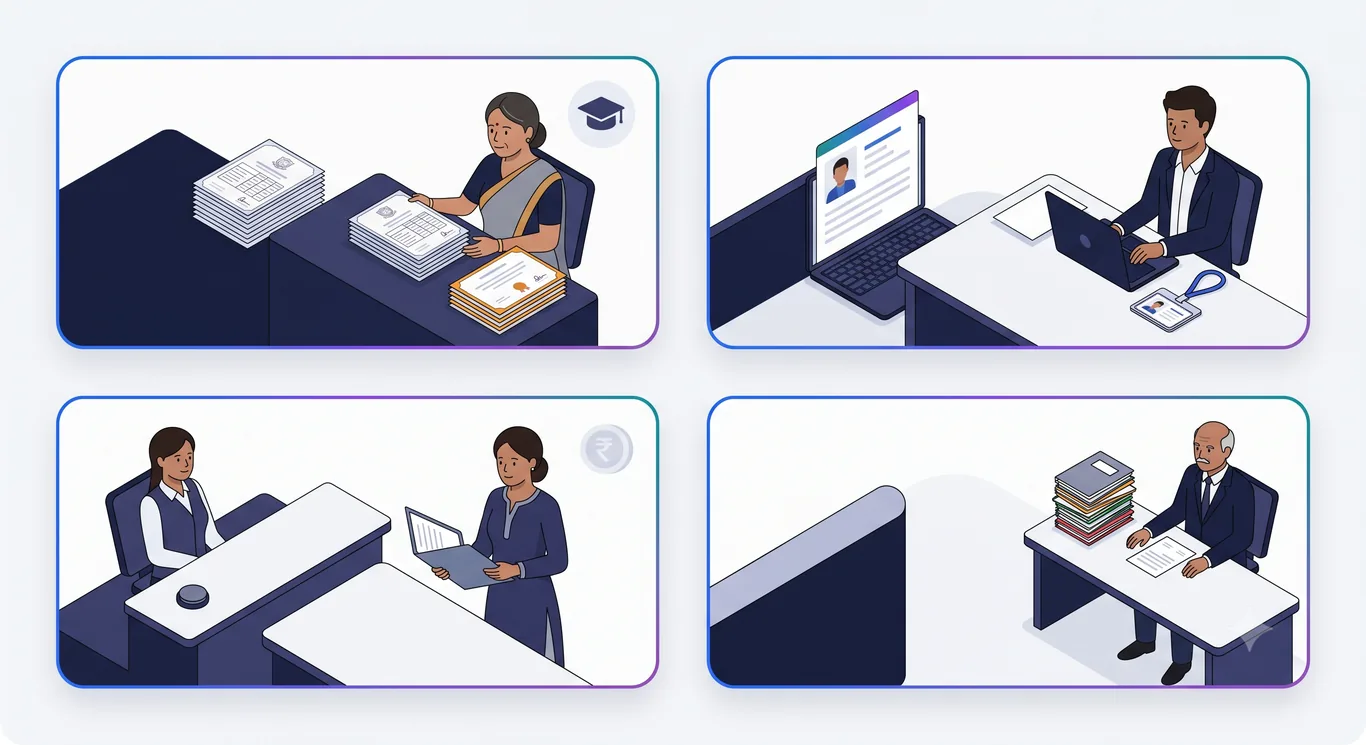
🎓 University Admissions and Registrars
PG admissions, lateral entry and PhD intake all depend on prior marksheets. A changed percentage can move a candidate past a cut-off.
Scholarship desks face the same problem with income and caste certificates. See our guide to scholarship document verification.
💼 HR and Background Verification
Fresher hiring runs on certificates alone, with no employment history to cross-check.
Industry reports put education at roughly 10-13% of all discrepancies found in background checks. Our HR document verification guide covers the full onboarding stack, and automated background verification covers the checks beyond education.
🏦 Lenders
Education loans and study-abroad financing use marksheets and admission letters as core documents. A forged admission record means a loan against a course that does not exist.
🏛️ Recruitment Boards and Regulators
Government recruitment and professional councils verify thousands of certificates per cycle, often under deadline. Volume is exactly where sampling lets fakes through.
Manual vs Automated Certificate Verification
Manual verification is not careless. It is simply built for a world where fakes were visible.
| Factor | Manual review | Automated verification |
|---|---|---|
| Coverage | Often a sample, under deadline | Every document, every time |
| Detects AI edits | Rarely, the edit is invisible | Metadata, ELA and QR checks |
| Issuer confirmation | Letters and emails, slow | DigiLocker pull where available |
| Consistency checks | Depends on the reviewer | Same rules applied to every file |
| Audit trail | Notes, if any | Logged per action, per user |
| Staff time | Spent on every file | Spent only on referred files |
Scale changes the picture fastest. SBTE Bihar verified 50,000+ documents within a couple of days, a job that previously took weeks.
How to Build a Certificate Verification Workflow
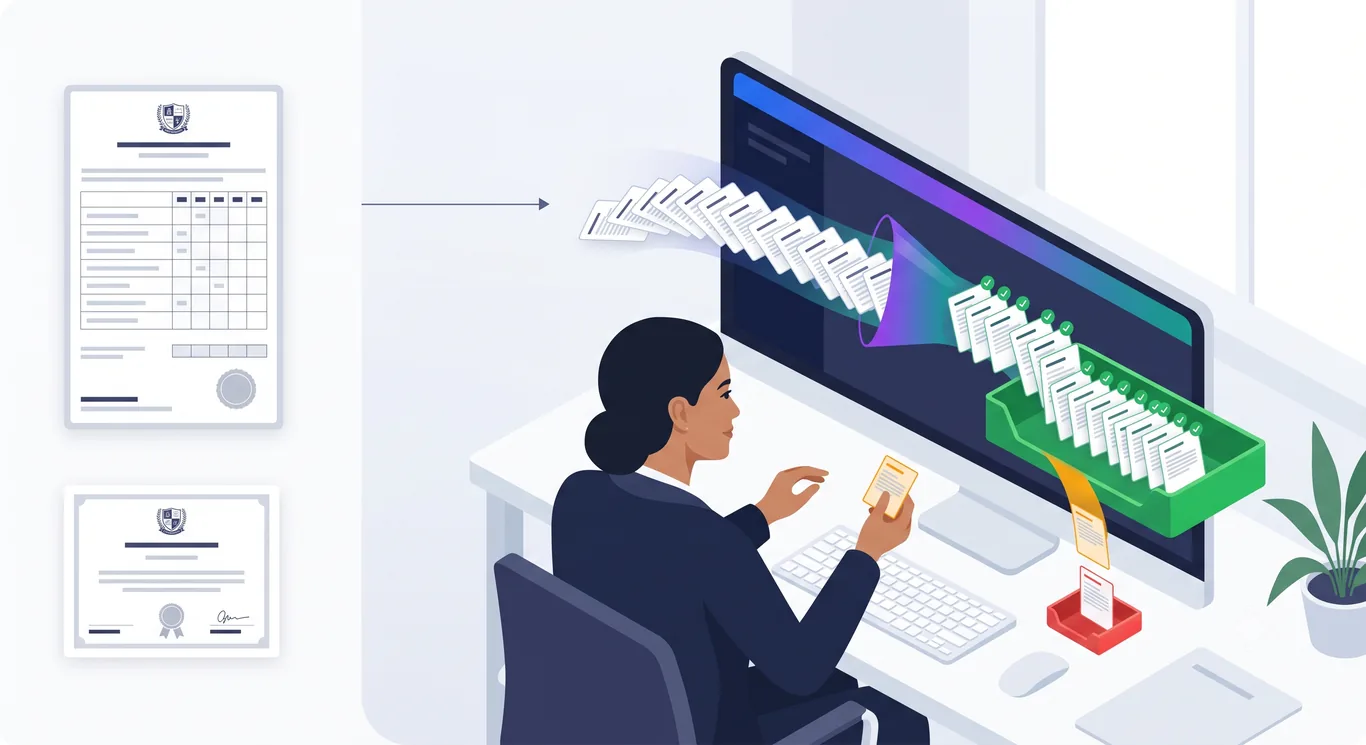
The goal is simple. Clean files pass automatically, and your team looks only at the exceptions.
- Collect. Take consent first. Prefer a DigiLocker pull. Accept uploads as the fallback.
- Extract. Marks, names, dates, roll numbers and QR payloads become structured data.
- Run the five checks. Forensics, pixel analysis, QR and signature, issuer source, consistency.
- Route and log. Clear passes go through. Any conflict goes to a reviewer with the evidence attached, and every decision is logged: who verified what, when, and why.
DocuExprt runs this workflow on one platform. It combines pixel-level tamper detection, QR and digital signature validation, DigiLocker source verification and checks against PAN, Aadhaar, GST and 20+ government databases.
Workflows are built in a no-code builder with Pass, Refer and Fail routing. Teams can batch upload up to 100 files at once, and every action is captured in an audit log.
Guardrails: Verify Fairly, Not Just Fast
A fraud check that wrongly rejects genuine students creates its own problem. Build these guardrails in from day one.
- ✅ Never auto-reject on one forensic flag. Re-scans and PDF converters trigger false alarms. Refer, don't fail.
- ✅ Take explicit consent before pulling records, in line with India's DPDP Act.
- ✅ Mask Aadhaar numbers you do not need. Our Aadhaar masking tool shows how.
- ✅ Give candidates a route to respond when a document is referred.
- ✅ Keep the evidence behind every decision, not just the verdict.
- ✅ Re-check at decision points, such as final admission or offer letter, not only at application.
Key Takeaways
- AI tools let anyone edit a genuine marksheet in minutes, and the result passes a visual check.
- Organised forgery persists too: one Kerala case seized more than one lakh fake certificates.
- There are five kinds of fake certificate, and no single check catches all of them.
- File forensics and pixel analysis show whether a document was changed after issue.
- QR codes and digital signatures only help if someone decodes and validates them.
- Issuer verification through DigiLocker and NAD is the strongest check, because it bypasses the uploaded file.
- A database lookup must compare values, because AI-edited fakes often carry real roll numbers.
- Automate the five checks, route conflicts to reviewers, and log every decision.
Frequently Asked Questions
How can you tell if a marksheet has been edited with AI?
Check the file, not just the image. Look for editing software in the PDF metadata, a modified date long after the issue date, and multiple incremental saves. Error Level Analysis highlights regions that compress differently from the rest, and a decoded QR code will still show the original marks. The surest test is to compare the document with the issuer's own record.
Can a fake certificate pass a visual check by HR?
Yes. An AI-edited certificate starts from a genuine document and changes only a few values, so the layout, logo, seal and signature are all real. Visual review was designed to catch badly printed fakes, not surgical digital edits.
What is the most reliable way to verify a degree certificate in India?
Fetch the record from the issuer rather than trusting the uploaded file. Universities and boards issue academic records through DigiLocker and the National Academic Depository, and a consent-based DigiLocker pull returns the issuer's own copy. For older records that were never digitised, ask the university's examination section to confirm directly.
Is a certificate with a QR code always genuine?
No. A QR code can be copied from another certificate or point to a lookalike website. Decode it, confirm the domain belongs to the issuer, and compare every field in the QR payload with the printed document. A mismatch is a strong sign of editing.
Is automated certificate verification practical for large volumes?
Yes, volume is where it helps most. Automated checks run on every document instead of a sample, and reviewers see only the files that raise a conflict. SBTE Bihar used DocuExprt to verify more than 50,000 documents within a couple of days, work that previously took several weeks.
The Edit Is Invisible. The Evidence Is Not.
AI has made forging a marksheet cheap and fast. It has not made it undetectable.
Every edited file leaves traces in its metadata, its pixels, its QR code and its disagreement with the issuer's record.
The organisations that stay ahead will be the ones that check those traces on every file, automatically, and keep their people for the judgement calls.
Universities, boards and enterprises already run academic verification on DocuExprt, from SBTE Bihar to VIT Vellore.
Stop AI-edited certificates at intake
Bring a sample batch. We run it live on the demo.
- 3.5 lakh+ documents verified
- 99%+ verification accuracy
- SBTE Bihar: 50,000+ docs in days
- Only exceptions reach your team
Trusted by enterprises and government boards



Free trial tokens available for testing.