Bank Account Verification API: How to Verify Beneficiary Details & Prevent Payment Fraud
Table of Contents
Introduction
India processed 228.3 billion UPI transactions worth ₹299.7 lakh crore in 2025. That is 698 million transactions per day flowing through the banking system and UPI fraud cases hit 6.32 lakh incidents worth ₹485 crore in FY 2024-25 alone, an 85% year-on-year increase.
For enterprises disbursing payments like payroll, vendor settlements, insurance claims and loan disbursements, every outgoing payment carries risk. A wrong beneficiary name, a fake bank account, or a mule account intercepting funds means lost money and regulatory complications. Manual bank verification through branch visits or phone calls is not feasible when you are processing hundreds of payments daily.
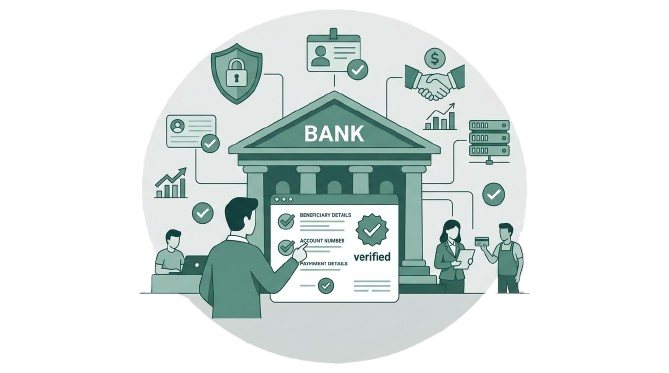
The solution is API-driven bank account and UPI verification — real-time checks that validate account ownership, confirm account status, and cross-reference beneficiary details before a single rupee leaves your account.
This guide covers how banking verification APIs work, the four verification endpoints DocuExprt offers, and how to build an automated payment verification workflow.
The Rising Cost of Payment Fraud
Payment Fraud by the Numbers
The numbers are stark and growing:
| Metric | Data |
|---|---|
| UPI fraud cases (FY 2024-25) | 6.32 lakh incidents, ₹485 crore |
| YoY increase in UPI fraud | 85% |
| Cyber fraud siphoned (Apr 2021 - Nov 2025) | ₹52,000 crore |
| UPI users affected by fraud | 1 in 5 users in last 3 years |
| Victims who didn't report fraud | 51% |
| Fraud loss per ₹1 lakh transacted | ₹1.40 (RBI data) |
| Total UPI transactions (2025) | 228.3 billion, ₹299.7 lakh crore |
As digital payments scale — UPI alone grew 29.3% in volume year-on-year — the attack surface expands proportionally. With 500+ million unique UPI users and 685 banks on the UPI network by end of 2025, the ecosystem is massive and the fraud vectors multiply.
Common Payment Fraud Patterns
Mule accounts: Criminals open or take over bank accounts specifically to receive and launder stolen funds. In December 2024, the RBI introduced MuleHunter.AI to detect these accounts, but the problem remains widespread.
Wrong beneficiary fraud: Fraudsters intercept vendor payment instructions, changing bank account details in invoices. The enterprise pays a legitimate-looking invoice to the wrong account. By the time the error is discovered, funds have been withdrawn or transferred.
CEO/CFO impersonation: Attackers impersonate senior executives via email, instructing finance teams to make urgent payments to fraudulent accounts. Without automated beneficiary verification, these payments clear without question.
Fake vendor accounts: Fraudsters create vendor profiles with bank accounts they control, submit invoices for fictitious goods or services, and collect payments before disappearing.
Why Manual Verification Fails
Traditional bank verification methods have critical gaps:
- Branch verification letters take 3-7 business days and are easily forged
- Phone-based bank confirmation depends on reaching the right person at the branch — unreliable and not scalable
- Cancelled cheque verification only confirms the account number exists, not whether the beneficiary name matches
- No real-time capability — by the time manual verification completes, the payment window has often passed
- Zero scalability — a finance team processing 200+ vendor payments monthly cannot manually verify every beneficiary
